AI Agents Are Not the Next Chatbots. They Are the Next Workforce.
For the last few years, artificial intelligence has been mostly about one thing: Ask a question. Get an answer. ChatGPT writes. Gemini summarizes. Claude analyzes.
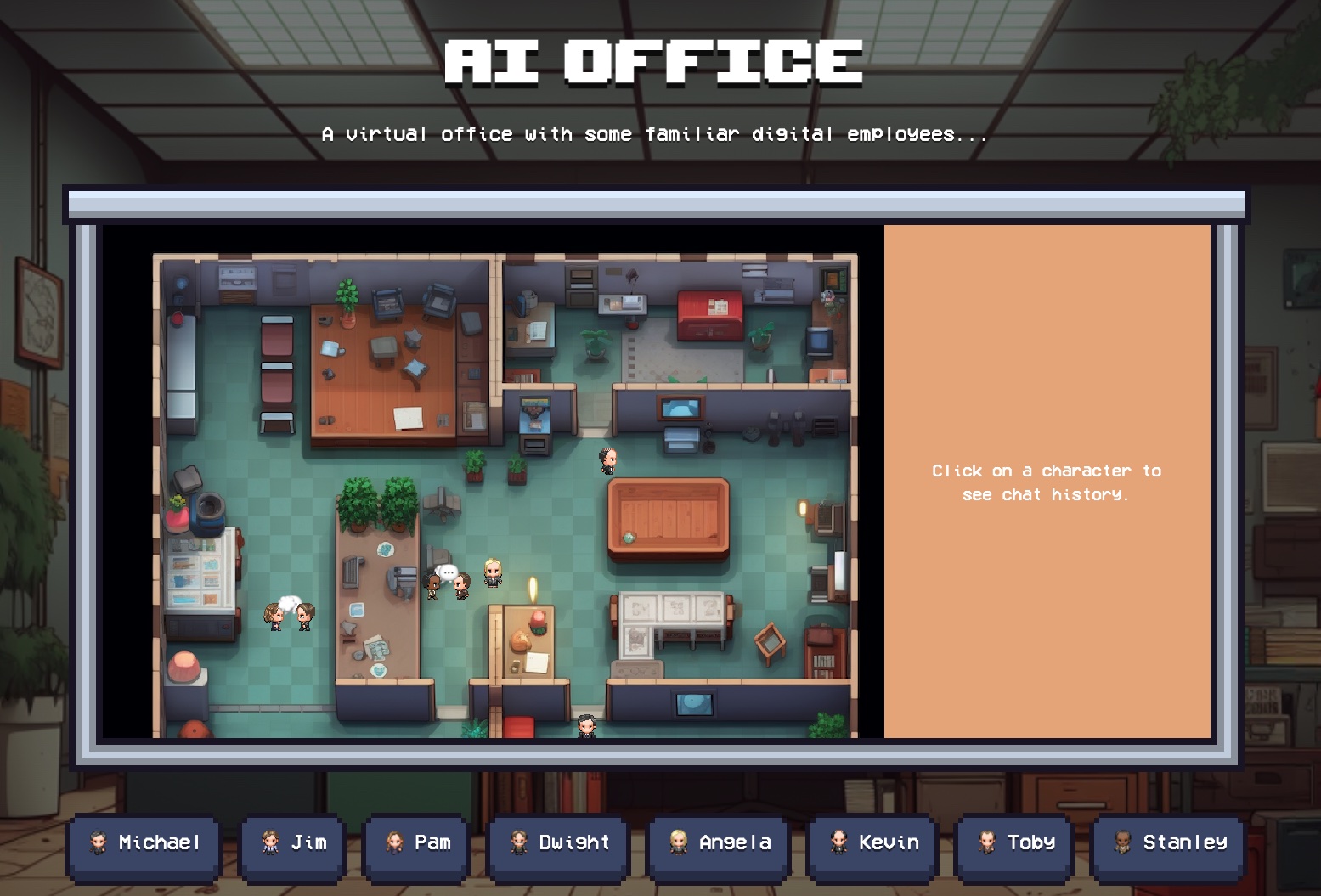
AI creates images, code, reports, presentations, and content.
But the next major shift is already beginning.
AI is moving from answering to acting.
That is where AI Agents enter the picture.
An AI Agent does not simply tell you what to do.
It can understand a goal, break it into steps, use tools, make decisions, interact with software, and complete the task.
That changes everything.
Because the future of AI may not be about having a smarter chatbot.
It may be about having a digital worker.
What Is an AI Agent?
A traditional AI assistant is reactive.
You ask:
“Can you write an email to this customer?”
It writes the email.
An AI Agent can go further.
You can say:
“Find customers who have not responded in the last 14 days, draft personalized follow-ups, send them, and update the CRM.”
Now the system has to do more than generate text.
It has to:
understand the objective,
access customer data,
identify the right contacts,
decide what action is needed,
create personalized messages,
use email software,
update another system,
and potentially monitor the result.
That is an entirely different level of automation.
The AI is no longer just producing information.
It is participating in a workflow.
From Copilot to Autopilot
The first wave of generative AI was about copilots.
AI helped humans work faster.
Write faster.
Research faster.
Code faster.
Create faster.
The next wave is increasingly about autonomous execution.
This does not mean humans disappear from the process.
But the relationship changes.
Instead of telling AI exactly how to complete every step, humans increasingly define the goal.
For example:
Old model:
“Write five product descriptions.”
Agent model:
“Review our 100 worst-performing products, identify which descriptions are weak, rewrite them, optimize the metadata, and prepare the changes for approval.”
The difference is enormous.
One is a content generator.
The other is an operational system.
Why AI Agents Matter
Most businesses do not actually suffer from a lack of information.
They suffer from a lack of execution.
There are already thousands of dashboards.
Thousands of reports.
Thousands of notifications.
Employees know what should be done.
The problem is that many repetitive tasks still require someone to manually move information from one system to another.
AI Agents can potentially remove this friction.
Consider a typical business workflow.
A lead enters the CRM.
Someone checks the company.
Someone researches the contact.
Someone prepares an email.
Someone follows up.
Someone updates the CRM.
Someone schedules a meeting.
Someone prepares a briefing.
Each individual task is simple.
But together they consume enormous amounts of human time.
An AI Agent can potentially connect these steps into one automated workflow.
That is why AI Agents could become much more important than another productivity tool.
They may become a new layer of business infrastructure.
Every Department Could Have Agents
The impact will not be limited to software development.
Almost every business function can potentially use AI Agents.
Marketing
An AI Agent could:
monitor competitors,
identify emerging topics,
generate campaign ideas,
create content,
publish drafts,
analyze performance,
and suggest the next campaign.
Sales
A sales agent could:
research prospects,
score leads,
prepare personalized outreach,
follow up automatically,
update the CRM,
and schedule meetings.
Customer Service
A support agent could:
understand a customer issue,
check previous conversations,
access order history,
process simple requests,
escalate complex cases,
and update internal records.
Finance
A finance agent could:
review invoices,
detect unusual transactions,
reconcile records,
prepare summaries,
and flag anomalies.
E-commerce
An e-commerce agent could:
monitor product performance,
detect inventory risks,
adjust merchandising recommendations,
analyze customer reviews,
prepare product content,
and identify pricing opportunities.
The important point is this:
AI Agents are not another department.
They can become a capability inside every department.
The Real Power Is Tool Use
A language model by itself is powerful.
But an agent becomes much more useful when it can interact with external systems.
Email.
CRM.
Calendar.
ERP.
Analytics platforms.
Databases.
Browsers.
Payment systems.
Internal APIs.
Documents.
Spreadsheets.
The more tools an agent can safely access, the more work it can complete.
This is why the AI Agent ecosystem is developing so quickly.
The model is only one part of the system.
The real value comes from combining:
reasoning + memory + tools + data + permissions + workflows.
That combination turns AI from an interface into an operator.
The Agent Economy Is Coming
Today, companies hire people and buy software.
Tomorrow, they may also deploy fleets of specialized AI Agents.
One agent for sales research.
One for customer support.
One for finance operations.
One for competitor intelligence.
One for e-commerce optimization.
One for internal reporting.
These agents may communicate with each other.
A sales agent may pass information to a CRM agent.
A CRM agent may trigger a finance agent.
A finance agent may request approval from a human manager.
This creates something very different from traditional software.
Instead of users constantly operating tools, agents may operate the tools on behalf of users.
That could fundamentally change the software industry.
The question may no longer be:
“Which software should we use?”
It may become:
“Which agents should be allowed to use our software?”
SaaS May Become Agent-First
For years, SaaS companies competed on interface design.
Better dashboards.
Better navigation.
Better workflows.
But if AI Agents become primary software users, some interfaces may become less important.
An agent does not care whether a button has a beautiful gradient.
It cares whether the system has a reliable API.
Structured data.
Clear permissions.
Fast responses.
Predictable workflows.
This could create a major shift from:
Human-first SaaS
to:
Agent-ready SaaS.
Companies that make their products easy for AI Agents to understand and operate may gain a major advantage.
In the same way that mobile forced companies to redesign their digital experiences, agents may force software companies to redesign how their systems expose functionality.
The Biggest Challenge: Trust
The biggest question around AI Agents is not intelligence.
It is trust.
Giving AI permission to write text is relatively low risk.
Giving AI permission to:
send emails,
move money,
delete files,
change pricing,
approve refunds,
modify databases,
or contact customers
is completely different.
The more autonomous an agent becomes, the more important governance becomes.
Businesses will need:
clear permissions,
approval workflows,
audit logs,
identity management,
security controls,
human oversight,
and strict boundaries.
The winning AI Agent platforms may not simply be the smartest.
They may be the most trustworthy.
Human Approval Will Still Matter
Fully autonomous agents make exciting headlines.
But in many real business environments, the most practical model may be:
AI executes. Human approves.
For example:
The agent identifies 100 customers who should receive a discount.
It prepares the offers.
It calculates the financial impact.
It creates the emails.
But a human approves the campaign before anything is sent.
This model combines speed with control.
Over time, businesses may gradually increase autonomy as agents prove reliable.
This is similar to how automation has always evolved.
First, humans supervise every step.
Then they supervise exceptions.
Eventually, the system handles most routine work automatically.
AI Agents Could Change Job Design
The rise of agents does not necessarily mean every job disappears.
But many jobs may change.
Employees may spend less time doing repetitive operational tasks and more time:
setting goals,
making judgments,
handling exceptions,
managing relationships,
designing strategy,
and supervising AI systems.
A marketer may manage marketing agents.
A salesperson may manage prospecting agents.
An analyst may manage research agents.
A founder may manage an entire collection of digital workers.
This creates a new skill:
Agent Management.
Knowing how to define goals, set constraints, evaluate results, and supervise AI Agents could become an important business capability.
The New Competitive Advantage
For years, companies gained advantage through:
better websites,
better mobile apps,
better data,
better automation,
better cloud infrastructure.
The next advantage may come from something else:
better AI operations.
Companies that learn how to deploy AI Agents effectively may operate faster with smaller teams.
They may respond to customers faster.
Analyze markets faster.
Launch campaigns faster.
Test ideas faster.
And make decisions faster.
The difference may not be that one company has access to AI and another does not.
Most companies will have access.
The difference will be:
Who knows how to turn AI into execution?
The Future of Work May Look Very Different
Imagine opening your laptop in the morning.
Instead of checking ten dashboards, you see one summary:
Your sales agent contacted 47 qualified leads.
Your marketing agent identified three emerging topics.
Your support agent resolved 82% of overnight requests.
Your finance agent flagged two unusual invoices.
Your competitor agent detected a pricing change.
Your e-commerce agent found five products with conversion problems.
And now it asks:
“Would you like me to take action?”
That is the real promise of AI Agents.
Not another chatbot.
Not another productivity feature.
But a new operational layer between humans and software.
The first generation of AI helped us create.
The next generation will help us execute.
And the companies that understand this shift early may gain one of the biggest productivity advantages of the next decade.
AI assistants answer questions.
AI Agents get things done.